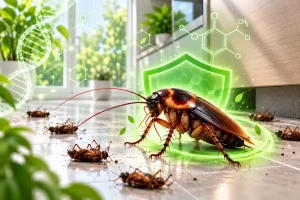

After millions of years of evolution, the mosquito remains remarkably adaptable. The challenge for modern science is no longer simply to eliminate it, but to understand it well enough to stay one step ahead. The most futuristic element of this effort is the integration of artificial intelligence, genomic technologies, climate data, and precision surveillance.
One of the most fascinating examples of this technological shift comes from Verily Life Sciences, an Alphabet company that developed Project Debug. The project’s goal is to drastically reduce mosquito populations without relying on insecticides. Instead, it attempts to interfere with their ability to reproduce. It specifically targets the Aedes aegypti mosquito, which is responsible for spreading dangerous viruses such as dengue, Zika, chikungunya, and yellow fever.
The core weapon of Project Debug is a naturally occurring bacterium called Wolbachia. At Verily Life sciences, scientists rear male Aedes aegypti mosquitoes in laboratories and infect them with Wolbachia before releasing them into areas with wild mosquito populations. When these males mate with compatible wild females, the resulting eggs fail to develop due to a biological phenomenon known as cytoplasmic incompatibility. These released males do not bite humans or spread disease. Thus, the objective of Project Debug to reduce the number of viable offspring and ultimately suppress the population of disease‑transmitting mosquitoes can be achieved.
Another fascinating possibility is population replacement. Rather than suppressing mosquito numbers, scientists use Wolbachia to create a mosquito population that is less capable of transmitting viruses. The bacteria interfere with the ability of Aedes aegypti to transmit virus. Recognizing the vital role of mosquitoes in ecosystems, the objective is not to eradicate the mosquitoes but to transform the mosquito population into one that poses substantially less risk of disease transmission.
Project Debug acts as a high‑tech version of the traditional Sterile Insect Technique (SIT), combining Wolbachia with artificial intelligence, genomic technologies, climate data, and precision surveillance.
Imagine extending this concept much further. Instead of waiting for people to report mosquito menace, an intelligent surveillance system could continuously analyze temperature, rainfall, humidity, vegetation, drainage patterns, water accumulation, and mosquito‑trap data. Artificial intelligence could then identify locations where conditions are becoming favorable for breeding and predict a population increase before it becomes noticeable to people.
In the future, mosquito control could therefore become increasingly predictive rather than reactive. The battle against mosquitoes is shifting from the spray gun to the laboratory, from the laboratory to the cloud, and from the cloud to the algorithm.